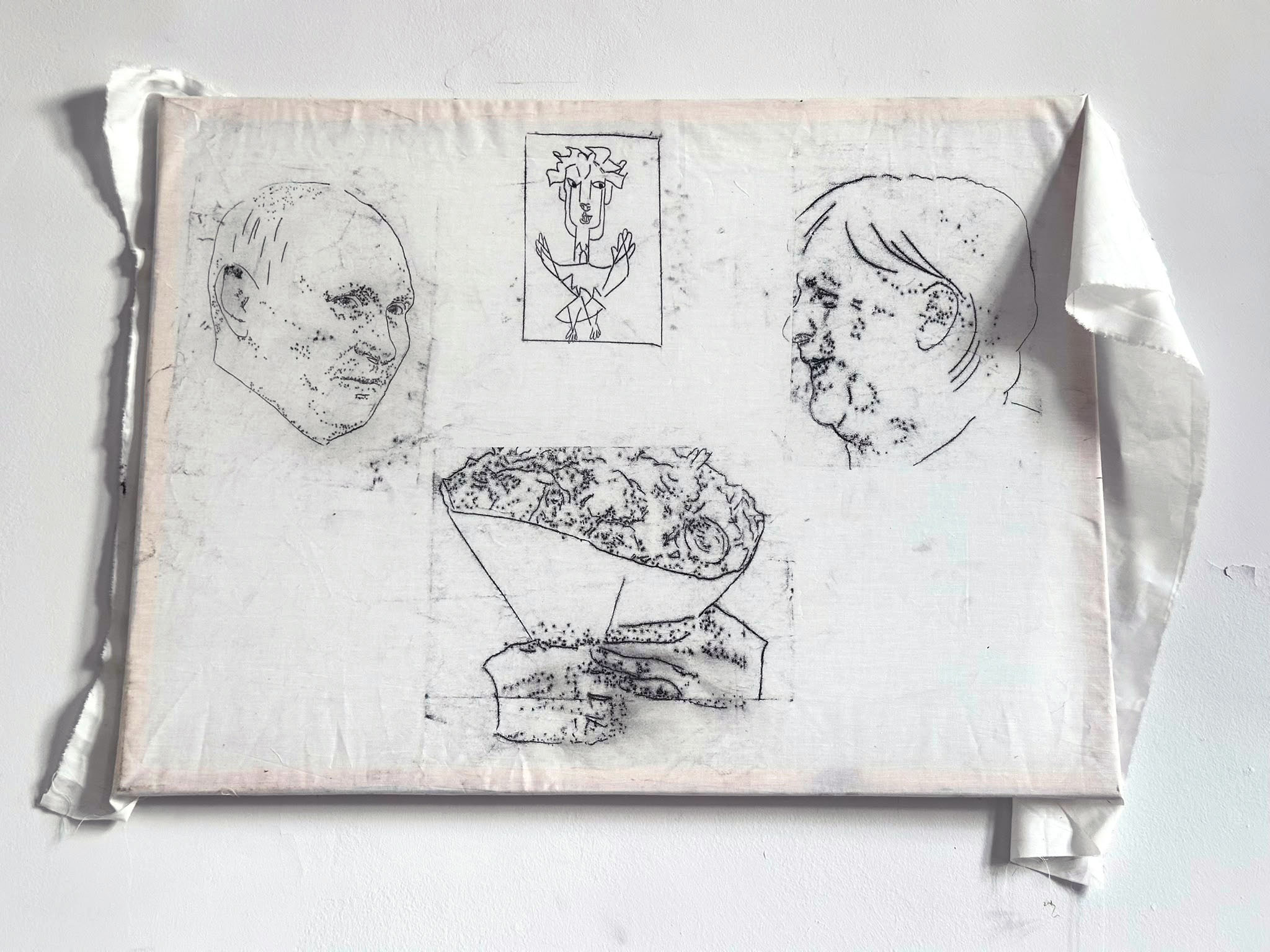
Conclusions by Tate on Joseph Beuys' Eurasia:
"Reflecting on Eurasians, Klaus-D. Pohl notes Beuys’s statement that for a long time he had felt he was like a shepherd on reconnaissance, looking after a flock. He points out that the work suggests a person pausing in preparedness for movement across a landmass, surmising, ‘The staff will become a companion and pioneering tool for the penetration of space: from east to west – from west to east’. With the Nazi expansionist notion of Lebensraum and Putin’s more recent ideas about Eurasia in mind, a figure suggesting the ‘penetration of space’ across Eurasia must surely elicit caution. Lebensraum, the concept that a given race requires a certain amount of space for its survival, was the basis on which the Third Reich pursued an aggressive form of settler colonialism, envisaging the expulsion of most of the indigenous populace of Central and Eastern Europe. Today, Putin’s idea of Eurasia, while advancing valid concerns about the USA’s idea of its global dominance, could be understood as a means to seek a larger empire for Russia. Its related Eurasianism – championed by Putin’s strategic advisor, the philosopher, sociologist and political analyst Aleksandr Dugin – may not be fascism in the strict sense, but its conservatism and revision of fascist themes constitutes a potent and disturbing rhetoric that sees liberalism as a threat to people’s ethno-cultural survival and could, as Alan Ingram argues, be seen as neo-fascism."
"In Russia, Putin’s Eurasia is a cold form that looks increasingly like neo-fascism, espousing the expansion of intolerance as much as territory. In China, under a form of state capitalism, the super-wealthy entrepreneur lives cheek by jowl with the poverty-stricken, if gainfully employed, streetsweeper. Freedom is limited. The Chinese word for harmony, He Xie in Western characters, is invoked by the state to ensure that people work for the common good."
Third lesson to my offspring - The special path to inner peace lies through the detoxification of the other(s), especially for an artist.
Chapter 7